 Edwin Omondi Odoyo
TL;DR: Notary, witness, and attestation all verify signatures, but differently: a notary is a state official who checks ID, ensures consent, and applies an official seal; a witness just observes the signing; an attestor formally certifies the signing was done properly, but without a notary’s seal or state authority. eSignatures now let all three happen digitally, but using the wrong one can make a document unenforceable.
The logistics company entered into a service agreement with a regional warehousing entity. The contract required notarization and attestation to validate the parties’ obligations. However, the logistics company hastily executed the agreement without carefully reviewing the notarial language.
The notary’s certificate included broad attestations that inadvertently bound the company to indemnify the warehouse for liabilities beyond the scope of the negotiated terms. When a dispute later arose over damaged goods, the logistics company found itself contractually obligated to cover losses it had never intended to assume.
Caution should be exercised when signing agreements requiring notarization or witnessing. The legal enforceability of such agreements hinges on the authenticity of signatures and the integrity of the attestation process. Under U.S. law, notarization, witnessing, and attestation serve as safeguards against fraud, ensuring that signatories are properly identified and that their consent is voluntary.
The logistics company’s oversight demonstrates that entities can face significant exposure if they fail to scrutinize the precise language of notarial certificates. A notary’s acknowledgment or witness statement is not a mere formality since it can materially alter the scope of contractual obligations.
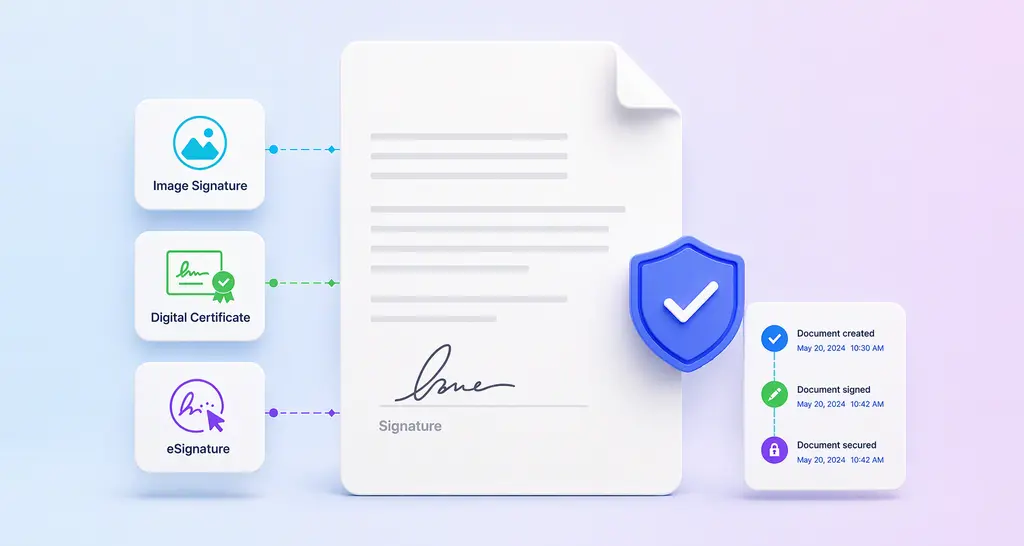
Today, the use of eSignatures in notarization, attestation, and witnessing, where applicable, provides a legally binding and secure way to sign documents electronically, replacing ink signatures and physical stamps with digital alternatives. They enable both In-Person Electronic Notarization (IPEN) and Remote Online Notarization (RON), utilizing digital certificates and tamper-evident technology to verify identity and maintain document integrity. Whether executed in ink or electronically, every notarized agreement must be reviewed with professional care to avoid unintended liabilities.
BoldSign’s Free Contract Templates Library provides professionally drafted agreement templates that can be efficiently reviewed and customized to meet users’ specific requirements. These agreements incorporate essential legal provisions designed to safeguard parties’ rights, obligations, and overall legal interests.
Introduction
For legal documents to be legally binding, the final step is always having the document properly signed. In most states, this process varies enormously. This makes it highly essential for one to know what is required to ensure legally valid documentation. Commonly, the signing process involves a notary or enlisting others as witnesses to the document’s signing. At the heart of legal transactions, witnesses, notaries, and the act of attestation are interconnected parts of the legal process which are paramount in ensuring validity and authenticity.
Articulate attestation, proper witnessing, and notarization are crucial for upholding integrity, ensuring fraud-free and enforceable documentation. Thus, whether it is a promissory note, contracts, agreements, wills, affidavits or any other legal transaction or documents, it is usually required by the states or agency’s policies and procedures to have a signature guarantee or an official notarization. Therefore, understanding the difference between a witness, notary and act of attestation protects entities, individuals and companies from invalidation, legal disputes or rejection of their filings.
Notary
A notary is a state-appointed official who embodies the authority of the state and is vested with the power to certify, authenticate, and preserve documents. Notaries verify the signers’ identities, make sure all the parties understand the contents of the document, and ensure the signature is voluntary. After the confirmations, the notary places a seal or stamp of approval digitally or physically on the documentation to show that it has been notarized. Whenever a notary is unsure of a person’s identity, suspects fraud, and believes that one party has potentially been coerced or the party has no clear understanding on what they are signing, the notary is allowed to refuse the service.
Why are notaries crucial and distinct
i). A notary’s role is official and demands completion of notarial certification.
ii). The digital or physical seal of a notary gives sovereign assurance that a document is:
- Genuine;
- Properly signed; and
- Its parties fully identified, thereby adding a layer of authenticity that is often required for legal acceptance.
iii) Notarial stamps or seals are legally recognized in courts, government offices, and financial institutions.
iv) In some limited cases due to associated risks and conflicts of interest, notaries can act or serve as a witness, and this varies by the state. This can, however, raise concerns about impartiality and credibility of the notarization process, thus often not legally recommended.
v) Documents such as prenuptial agreements, financial transactions, affidavits, power of attorney, wills, property deeds and contracts often need a notary for both a signature guarantee and notarized signature.
As trained professionals, notaries provide a level of trust and security in transactions. Sometimes, notaries administer oaths. Thus, for validity, notarization must comply with the statutes, laws and regulations in which it is performed. Also, the notary has the mandate to ensure that all the necessary procedures are duly followed.
Witness
A legal witness stands as the eye of justice. They are neutral observer(s) whose presence affirms that a statement or an act occurred without deceit or coercion. For instance, a witness observes an authorized signatory signing a given documentation and then signs on the same documentation to confirm they oversaw the signing process.
By testifying to what they have seen or heard, witnesses anchor legal processes through honesty and human perception. Witnesses are often required in a legal proceeding to take an oath or make an affirmation before giving testimony.
Witnesses are never required to know or understand what is contained in the documentation; however, they must confirm the identities of the executing parties and physically observe the signing by all the parties before they sign the document. Even though every document does not require a witness for its signing process, several signing forms have their signing criteria which must be followed. Common examples of documents that require witnessing are mortgage agreements, wills, property deeds and divorce decrees.
Anyone who is not a party to the document being executed can serve as a witness. However, it is often advised that the witness should be of legal age, have sound mental capacity and should in no way benefit from what is being signed. Additionally, a witness is not allowed to notarize their own signature, since this forms a conflict of interest.
Attestation
Attestation is the acknowledgement or verification of the authenticity of a legal document and its signatures by a third party who witnesses the signing and ensures that proper procedure was duly followed. This involves witnessing a document’s signing and signing it electronically or physically to confirm that it was properly signed by the parties involved.
The person who formally certifies or confirms the execution of the legal document by signing it as a witness is called an attestor. Consequently, the person whose property and wishes are expressed in a will or testament and whose signature must be attested by witness for the will to be legally valid is termed as a testator.
Attestation is common in trusts, wills, property deeds and transfers, power of attorney, affidavits, certificates and company documents. Without an attestor in these documents, they may be invalid.
Comparison and contrast between attestation and witnessing
i). Attestation and witnessing are distinct legal concepts. While witnessing is passive and only testifies that the witness saw the act if required, attestation is active and formal and requires not only witnessing but also certifying the execution. Thus, attestation transforms a mere observation into a legally recognized and endorsed document depending on the statutory requirements. However, a witness may provide oral evidence in court that they observed the signing but, this alone may not satisfy the statutory requirements.
ii). An attester must not have any professional or personal ties with signatories, must have no direct interest, must be physically present, and must be legally competent, no required certification and may be required to confirm authenticity just as the witness.
iii). Witnesses and attestors have no official seals or stamps confirming executions.
Differences between Attestation and Notarization
Both notarization and attestation uphold the authenticity of legal documents, but each operates within its own framework of authority and formality, serving distinct purposes in the validation process. These are:
i). Attestation may be performed by ordinary witnesses who can confirm that they formally endorsed and oversaw the signing process while notarization requires a notary public, an officer of the law empowered by the state who verifies the identity of signers and certifies the documents with an official seal.
ii). An attestor signs the document to confirm execution; however, a notary stamps or seals the document with their official stamp or seal to confirm verification.
iii). A notarization carries official state-backed authority; thus, a notarized document is presumed authentic unless proven otherwise while attestation provides credibility and validity, but its strength depends on statutory requirements.
iv). A notary often keeps the record of the legal document while this is not required for attestation.
v). Notarization is required for documents intended for public, international, or official usage, such as affidavits, powers of attorney, or documents for foreign recognition while attestation is common in private documents like wills, contracts, and property deeds.
vi). When notarization is improperly done, the document may be rejected by courts, government offices, or foreign authorities, and the notary may face disciplinary action while in attestation if improperly done, the document may be invalid (e.g., an unattested will).
Summary table
| Witnessing | Notarization | Attestation |
| Act of observing an execution or signing and later attest that signing process was genuine if required. | Done by a licensed professional who verifies identity and ensures the signing meets legal standards. | Formal declaration that a document has been signed properly. |
| Are never required to know or understand what is contained in the documentation. | Notaries must verify the identity of signers. | Only verifies that the signers are proper and authorized signers. |
| Not allowed to verify their signature as a notary to prevent conflict of interest. | Carries official state-backed authority hence a notarized document is presumed authentic. | Strength depends on statutory requirement. |
| Anyone who is not a party to the document being executed can serve as a witness. | Requires a notary public, an officer of the law empowered by the state. | May be performed by ordinary witnesses who can confirm that they formally endorsed and overseen the signing process. |
| Not required to sign, but they must sign if the document requires a "subscribing witness." | Notary stamps or seals with official stamp or seal to confirm verification. | Attestor is required to signs to confirm proper execution of the agreement. |
| Not required to keep the record of the legal document. | Often keeps the record of the legal document. | Not required to keep the record of the legal document. |
Conclusion
The act of attestation, witnessing, and notarization carries the weight of electronic seal legitimacy and credibility especially in their interconnected and distinct roles in human transactions, agreements, contracts and declarations. Witnessing is the act of observing an execution, attestation is the formal certification of that observation through a signature, and notarization is the state-authorized validation that elevates a document’s credibility with official seals and records. Together, they ensure that private acts are transformed into legally recognized instruments, prevent fraud, uphold statutory requirements, and provide courts and institutions with reliable proof of authenticity.
Ready to simplify secure document signing? Try a free BoldSign trial and explore our complete eSignature platform.
Need help? Schedule a demo or contact our support team via our support portal.

Edwin Omondi Odoyo
Edwin is a skilled Data Scientist, with over 3 years of professional experience leveraging data-driven insights to solve complex business problems and support strategic decision-making. My background includes 2 years of legal research experience, where I developed strong analytical, investigative, and critical-thinking skills through legal analysis, case review, and evidence-based research. By combining expertise in data analytics, statistical modeling, and research methodologies, I excel at transforming complex datasets into actionable insights, communicating findings effectively, and delivering solutions that drive organizational impact.
More posts by Edwin Omondi Odoyo