



TL;DR: A promissory note may seem simple, but missing key details can lead to costly disputes. To protect both lender and borrower, clearly define the parties, loan amount, repayment terms, interest, default provisions, collateral, and legal jurisdiction, and ensure the document is properly signed and documented. Good drafting and digital document management help reduce risk and improve enforceability.
A Costly Oversight: When Trust Replaces Precision
A successful entrepreneur agreed to lend a longtime business associate a substantial sum of money to help expand a growing enterprise. Confident in their relationship and eager to move quickly, the parties relied on a generic promissory note template downloaded from the internet. The document recorded the loan amount but omitted critical details, including the repayment schedule, interest obligations, remedies upon default, and dispute resolution procedures.
For several months, the arrangement appeared to work perfectly. Then the business encountered financial difficulties, repayments ceased, and communication became strained. What had begun as a straightforward loan between trusted parties evolved into a costly legal dispute. The issue was not whether money had been advanced, but whether the parties had clearly documented their rights and obligations. Unfortunately, the promissory note raised more questions than it answered.
This scenario is neither unusual nor confined to any particular industry. Whether the parties are entrepreneurs, investors, family members, businesses, or financial institutions, an inadequately drafted promissory note can transform a simple lending arrangement into a prolonged and expensive dispute. Trust may initiate a transaction, but clear documentation is what protects it.
Understanding the promissory note
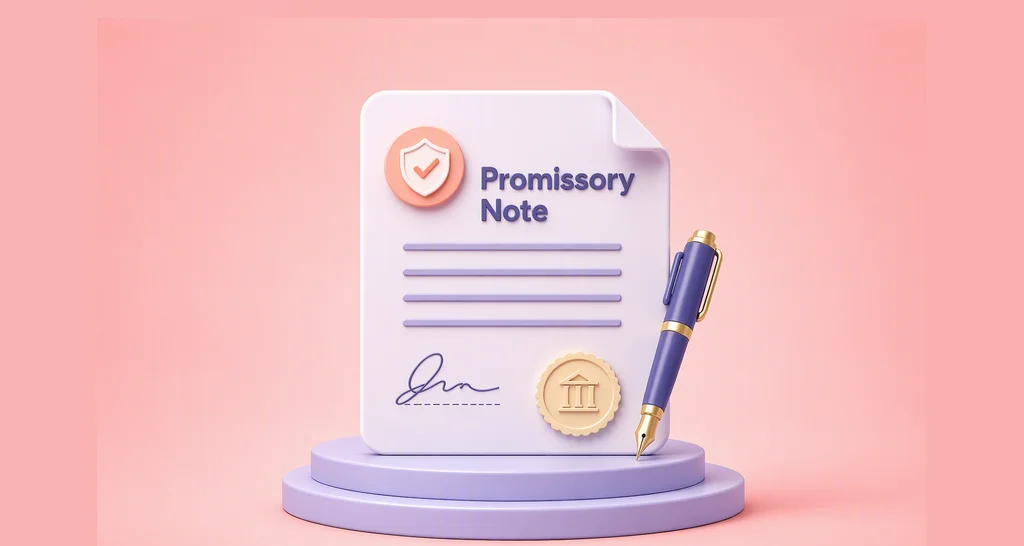
According to Black’s Law Dictionary, a promissory note is a written instrument containing an express and unconditional promise by one party, known as the maker, to pay a specified sum of money to another party either on demand or at a fixed or determinable future time. A promissory note may also qualify as a negotiable instrument if it satisfies applicable legal requirements.
The distinction between a promissory note and a simple acknowledgment of debt is significant. An acknowledgment merely confirms that money is owed, whereas a promissory note creates a binding promise to repay. Courts and tribunals frequently examine the precise wording of the document to determine the rights and obligations of the parties. As a result, even seemingly minor drafting errors can have major legal and financial consequences.
Promissory notes remain widely used because they are flexible, relatively simple to prepare, and suitable for a broad range of transactions. They are commonly used in shareholder funding, startup financing, business acquisitions, bridge financing, real estate transactions, private lending arrangements, and intercompany loans.
Why proper drafting matters
A promissory note serves multiple purposes. It evidences a debt, establishes repayment obligations, allocates risk, and provides a framework for enforcement if difficulties arise. In legal proceedings, the document often becomes the primary source of evidence regarding what the parties intended when the loan was made.
Courts consistently treat promissory notes as contractual instruments and will hold parties to the precise language on the page, not what they intended to say. A missing term, a blank field, or vague wording can be enough for a court to find a provision or even the entire obligation unenforceable.
Every provision included in a promissory note serves a purpose. Likewise, every omission creates the potential for uncertainty
Common drafting mistakes to avoid
Small drafting errors often lead to uncertainty, repayment challenges, and avoidable disputes. Below are some of the most common pitfalls to avoid when preparing a promissory note.
Failing to clearly identify the parties
A promissory note is only as strong as the information it contains. Always use the full legal names and details of the borrower and lender. If a company is involved, specify whether the obligation belongs to the business or an individual acting on its behalf. Clarity upfront prevents disputes later.
Omitting essential loan details
Never leave important terms open to interpretation. The note should clearly state the loan amount, repayment schedule, due dates, payment method, and maturity date. If the terms are unclear, disagreements are almost inevitable.
Using vague interest terms
Words like “reasonable interest” can mean different things to different people. Specify the exact interest rate, how it is calculated, and whether higher rates apply in the event of default. Clear terms reduce the risk of future conflict.
Neglecting default provisions
A promissory note should explain what happens if payments are missed. Defining events of default and the lender’s remedies ensures both parties understand the consequences if things do not go according to plan.
Poorly describing collateral
When a loan is secured, the collateral must be clearly identified. Vague descriptions can make it difficult for the lender to enforce their rights if the borrower defaults.
Ignoring governing law and jurisdiction
Every promissory note should specify which laws apply and where disputes will be resolved. This creates certainty and avoids unnecessary procedural disputes later.
Leaving out an acceleration clause
An acceleration clause allows the lender to demand immediate repayment of the outstanding balance after a default. Without it, recovering the debt may be slower and more complicated.
Improper execution
Missing signatures, incorrect dates, or unauthorized signatories can undermine an otherwise valid agreement. Ensure the note is properly signed and executed by all relevant parties.
Relying on verbal agreements
Verbal promises are easily forgotten or misunderstood. Any changes to the loan terms should be documented in writing to avoid disputes and protect both parties.
Leveraging technology: how Syncfusion can help
Managing promissory notes and loan documentation does not have to be complex. Syncfusion Document Solutions helps organizations efficiently create, edit, automate, and manage legal and financial documents, while the Syncfusion PDF Viewer SDK enables secure review, annotation, and collaboration on loan-related documents. By digitizing document workflows, organizations can help improve accuracy, maintain consistency, and reduce administrative risks throughout the document lifecycle.
Conclusion
A promissory note can be the difference between a smooth transaction and a costly dispute. While it may seem like a simple document, its strength lies in the clarity of its terms. By avoiding common drafting mistakes and leveraging tools like Syncfusion to streamline document management, parties can enhance enforceability, reduce risk, and build confidence in their financial arrangements.
In the end, when it comes to promissory notes, clarity is not just good drafting, it is good protection.
Ready to simplify secure document signing? Try a free BoldSign trial and explore our complete eSignature platform.
Need help? Schedule a demo or contact our support team via our support portal.