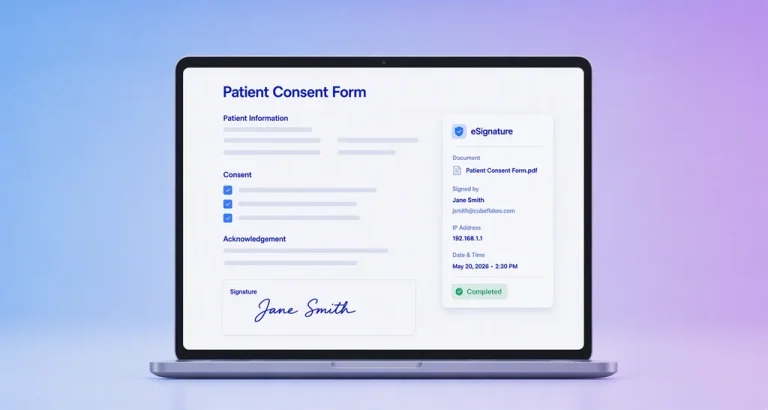
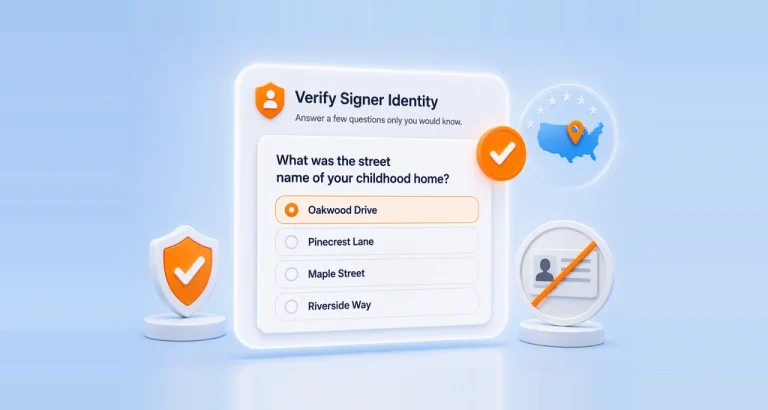
TL;DR: Contract risks often arise from unclear terms, rushed signing, missed deadlines, poor recordkeeping, and failure to review key clauses. Businesses can reduce these risks by using clear language, verifying agreement details, tracking obligations, retaining signed records, and using secure eSignature workflows.
A software company is developing a product for a client. The client provides the expected deliverables and timeline and begins planning the product launch. The company purchases a software license, believing it includes the features needed for the project. However, after signing the contract, it discovers that certain features were not included in the agreement.
Legal concerns often arise unexpectedly, and most entities unknowingly make contract mistakes that can lead to serious risks, including compliance penalties, security breaches, operational delays, and litigation. For businesses, contracts cover several operations and transactions that affect revenue streams, partnerships, terms and rights.
Legal risk is the potential for loss or harm arising from a party’s exposure to lawsuits, regulatory penalties, unenforceable contracts, or adverse changes in law that affect rights and obligations. It reflects the uncertainty and liability possible in any legal framework, where mistakes in compliance, drafting, or execution can trigger financial, operational, or reputational consequences.
Contract mistakes occur frequently, and understanding how they arise and how to prevent them before signing can help parties save time, revenue, and reputation while reducing operational strain.
Common signing mistakes in contracts and how to avoid them
Adoption of inefficient or outdated practices, manual processes, disconnection in communication and packed schedules make managing agreements difficult. Thus, when these and other several crucial issues are not addressed, the entities and organizations could be highly exposed. Below are the common mistakes in signing contracts:
Signing contracts before reading the fine print
Overlooking, ignoring or not fully comprehending the boilerplate provisions such as arbitration clauses, automatic renewals, or limitations of liability buried in the fine print of the draft can drastically alter rights and remedies by favoring the stronger party. This may make one unknowingly agree to unfair, binding, and even illegal terms and conditions in some cases.
BoldSign provides customizable contract templates that can help teams prepare agreements more efficiently. Organizations should adapt each template to their specific requirements and seek legal advice when necessary.
The best strategy is to read every clause carefully and, where necessary, negotiate modifications, seek clarification, or consult an attorney to review the contract before signing. An attorney can identify hidden risks, negotiate fairer terms, and ensure compliance with legal standards such as capacity, consideration, and legality. Courts generally enforce signed agreements regardless of whether a party claims not to have read them, so diligence at the outset is critical.
Reliance on verbal or message communications
Relying on oral or email promises is risky because verbal agreements are difficult to prove and may be unenforceable under the Statute of Frauds, which requires certain contracts such as real estate transactions and agreements exceeding one year to be in writing.
The principled strategy is to reduce all material terms to writing and ensure signatures from all parties. Written documentation provides a clear evidentiary record and protects against later disputes. Important contract terms and changes should be documented in writing. Using an eSignature platform can help parties maintain signed records and associated audit-trail information in one place.
Failing to secure necessary contractual protections
With properly negotiated contractual protections, parties can sometimes resolve disputes before going to court. A contract that does not have the necessary protections such as proper termination rights or negotiability for the non-breaching party leaves uncertainty about what constitutes an appropriate resolution or remedy.
This can be avoided by parties negotiating mutually agreeable resolutions, however if a resolution can’t be reached, then litigation serves as the viable option.
Whether on indemnity, dispute resolution, or liability caps, parties should assert negotiation rights. U.S. contract law respects freedom of contract, meaning parties can shape obligations to suit their interests if they negotiate effectively.
Ambiguity in terms
One highly frequent error in contracts is not defining key terms with precision. Vague language around delivery dates, payment schedules, or scope of work can lead to disputes and litigation. For instance, under U.S. contract law, ambiguity often results in courts construing terms against the drafter, which can disadvantage the party who failed to insist on clarity.
The best approach is to insist on specificity. Every obligation, deadline, and definition should be spelled out in writing to prevent conflicting interpretations.
Errors in contract drafts
Sometimes, after signing agreements, errors may be discovered, such as incorrect agreement dates, misidentified parties, or misspelled names. These errors are common and can have serious legal consequences depending on the jurisdiction. A wrong date, for example, may alter the enforceability of obligations, affect statute of limitations calculations, or create confusion about when performance is due.
Courts generally enforce the written terms as they appear, even if they reflect a drafting mistake, unless the parties can prove mutual mistake or seek reformation. Under U.S. law, unilateral mistakes are harder to correct unless the other party agrees, but mutual mistakes can justify judicial reformation.
Errors can be avoided by proofreading and verification before execution. Parties should cross-check all dates against calendars, confirm names and corporate entities against official records, and ensure consistency throughout the document. Using defined terms such as “Effective Date” or “Closing Date” rather than repeating calendar dates in multiple places reduces the risk of inconsistency.
Another safeguard is to initial each page and attach exhibits that clearly outline timelines, which helps prevent later disputes over clerical errors. If an error is discovered after signing, another appropriate legal remedy is often a contract amendment, addendum, or reformation, executed in writing and signed by all parties.
Finally, the best practice is to adopt a disciplined review process before execution and to promptly document corrections if errors are found.
Failing to keep proper records of signed agreements
Poor documentation can weaken a party’s position in a dispute and may lead to financial penalties, reputational harm, or compliance concerns.
This can be avoided by having organized records for emails, signed contracts, payment receipts, and written agreements. This helps clarify the agreement and protect the parties if legal questions arise. Electronic signature platforms such as BoldSign can help organizations retain completed agreements and associated audit-trail information in one place.
Overlooking contract deadlines and notices
Legal deadlines are firm, and failing to meet them may lead to significant consequences. Just as court submissions, replies to legal notifications, and compliance timelines must be addressed without delay, the same applies to contractual deadlines and schedules. Disregarding official communications or presuming they lack urgency can cause penalties or adverse results.
Consulting an attorney can help organizations understand relevant deadlines and manage responses appropriately. Additionally, asking the right questions during negotiations ensures clear understanding of obligations, schedules, and deadlines.
Summary analysis
Below is a summary of the common mistakes discussed above and how to avoid them before getting into any agreement:
| Common signing mistake | Potential legal risk | Resolution |
| Signing contracts before reading every detail | Can drastically alter rights and remedies. Unknowingly agreeing to unfair, binding and even illegal terms and conditions in some cases. | Read every clause carefully and, where necessary, negotiate modifications or seek assistance from an attorney before signing. |
| Relying on verbal communication | Difficult to prove and may be unenforceable | Reduce all terms to writing and ensure proper signing. |
| Failing to secure contractual protections | Leaves a gap on what constitutes an appropriate resolution or remedy | Negotiating mutually agreeable resolutions where applicable |
| Ambiguity in terms | Inconsistent language on delivery dates, payment schedules, or scope of work can lead to disputes and litigation | Insist on specificity; document every obligation, deadline, and definition in writing |
| Errors in contract drafts | May alter enforceability of obligations, statute of limitations calculations, or create confusion about when performance is due. | Proofreading and verification before execution. Have a disciplined review process. Use defined terms such as ‘Effective Date’ or ‘Closing Date’ to reduce the risk of inconsistency. Initial each page and attach exhibits clearly outlining timelines. Errors discovered after signing require a contract amendment or addendum fully signed in writing. |
| Lack of proper record retention for signed agreements | Weak legal evidence that may result in punitive penalties, reputational harm and many breaches. | Having organized records for emails, signed contracts, payment receipts, and written agreements. |
| Overlooking contract deadlines and notices | Assuming they lack urgency can cause penalties or adverse results | Consulting an attorney. Create proper record retention. |
USA Uniform Commercial Code (UCC) guidelines on common signing mistakes
Under the Uniform Commercial Code (UCC), common signing mistakes in contracts are addressed mainly in Article 3, which governs negotiable instruments. The rules clarify when a signature binds the signer personally, the principal, or neither. Section 3-401 establishes that any symbol executed with intent to authenticate counts as a signature and if an agent signs without clearly indicating their representative capacity, they may be held personally liable.
Additionally, the section states that unauthorized signatures are generally ineffective unless ratified by the person whose name was signed, while Section 3‑406 imposes liability if negligence contributes to forgery or alteration. In practice, mistakes such as failing to specify agency, using ambiguous signatures, or allowing lax signing procedures can shift liability and create disputes. To avoid these risks, parties should use clear signature formats, verify authority, and maintain safeguards against forgery.
Case laws where a common signing mistake created a legal issue
(a) National Bank of Commerce v All American Assurance Co. [1976] 726 F.2d 930
An insurance agent signed a policy without proper authority from the insurer. The insured relied on the policy, believing it valid. A legal issue arose on whether the insurer was bound by a contract signed by someone without authority. In the Court’s decision, the Arkansas Supreme Court held the insurer liable, emphasizing that companies must control who signs on their behalf. The company faced financial liability because the court ruled that the insured had reasonably relied on the apparent authority of the agent.
(b) FSHC Group Holdings Ltd v GLAS Trust Corporation Ltd [2019] EWCA Civ 1361
A dispute arose because the loan agreements contained drafting errors that failed to reflect the parties’ true common intention. Specifically, the documentation omitted provisions that would have secured lenders’ rights over assets worth hundreds of millions of pounds. Without correction, the lenders would have been left exposed, holding unsecured obligations despite the parties’ clear understanding that security was to be granted.
Since the lenders stood to lose priority security rights over substantial sums, the question was whether the courts could intervene to correct the written instruments so that they aligned with what the parties had actually agreed. The Court of Appeal in its ruling confirmed rectification is available when documentary wording fails to capture the parties’ common intention, even if the drafting error was complex. This case remains a leading authority on correcting contractual omissions in the UK.
Conclusion
The most effective way to avoid mistakes when signing agreements, whether they involve vague terms, overlooked fine print, reliance on oral promises, missing proper clauses, or clerical errors, is to approach the process with clarity, diligence, and legal oversight. U.S. contract law generally enforces the written word as it stands, so parties must ensure accuracy before execution. Careful drafting, thorough review, clear understanding of the agreement, negotiation, and professional counsel provide strong safeguards against disputes and unintended obligations while protecting the parties’ rights and ensuring the agreement reflects their true intent.
Ready to simplify secure document signing? Try a free BoldSign trial and explore our complete e-signature platform.
Need help? Schedule a demo or contact our support team via our support portal.